
Social Media Use in Neurology: An Analysis of Alzheimer's Information on TikTok with Emphasis on Role of Healthcare Professionals

Abstract
Introduction
Alzheimer's disease (AD) is the most common neurodegenerative cause of dementia. Social media has become a major source of information for patients and families. This study is the first to explore the quality, source, and content of AD videos on TikTok with emphasis on the role of healthcare professionals (HCPs).
Methods
A cross-sectional analysis was conducted on April 30, 2025, on AD videos on TikTok, including the data of usernames, video title, date of posting, and days since uploaded, video duration, video sources or uploader, content type, and engagement metrics. The DISCERN tool, a 15-item questionnaire for judging the quality of written consumer health information on treatment choices, was used to evaluate the quality of health information. Statistical analysis was conducted using R Statistical software.
Results
In total, 100 videos of the hashtag Alzheimer's were deemed eligible with median (interquartile range) engagement metrics: 4201.00 (300.25 to 66775.00) likes, 131.50 (13.00 to 1071.00) comments, and 438.00 (43.00 to 3414.00) shares. HCPs streamed only 33% of videos. There were videos about therapy suggestions (10%), disease descriptions (30%), and lifestyle (16%). The majority had poor (42%) and very poor (39%) quality. Videos by HCPs had more medical content with higher quality despite insignificant differences in engagement compared to non-HCP videos.
Conclusion
This study revealed an overall poor quality of public information on AD on TikTok, with a paucity of essential information, with minor contributions from HCPs. HCPs and organizations should provide creative, systematic plans to enhance public awareness on social media.
Introduction
Alzheimer's disease (AD) is the most common neurodegenerative cause of dementia and is responsible for significant individual morbidity and mortality, as well as economic impact on the healthcare system. Besides being the cause of 60-70% of dementia cases, cases are expected to increase up to threefold in the coming decades [1,2]. Thus, there is an increasing need to raise public awareness about AD to improve early diagnosis and proper management [3].
Social media has revolutionized methods of communication and interaction. Predictably, it has also transformed the learning and teaching methods. The younger generation has shifted from conventional educational resources to those found in the digital sphere [4,5]. Over the past ten years, digital education, a branch of technology-enhanced learning (TEL) that occurs solely online, has gained significant traction in the realm of teaching and learning. While digital education frequently incorporates social media, it also includes other supplementary digital tools such as podcasts, streaming videos, blogs, gamification, and virtual reality [6-9].
Since the COVID-19 pandemic, the population has turned to the internet as a source of information, and such a behavior has extended beyond the pandemic. Surveys suggest that one in every three to five persons seeks information before consulting a physician, depending on the age group. Consequently, the healthcare professionals (HCPs) and institutions have adopted the role of social media to spread health-related information [6,10,11].
TikTok is a fast-growing social media platform that utilizes short videos for content creation and sharing. As a relatively new platform, there is increasing interest in using these brief videos for purposes such as medical education, patient education, and advocacy [4,5]. They can demonstrate clinical skills, like physical examination techniques and history-taking abilities, or emphasize a particular learning objective in a visual and conversational way. The platform's video format is especially effective for producing micro-learning content that can be accessed "just in time". Hashtags help guide users to relevant content and can be strategically used to create a series of related videos that build on each other, similar to a tweetorial but in video form. The comments section allows educators to interact with learners, answer questions, or extend the discussion beyond what is covered in a short video clip [4,5,7,12].
TikTok is increasingly popular among the general public as a source of information and news. These trends can have implications for public health due to the abundance of health information on such platforms [13]. This work is the first to examine the AD information posted on the TikTok platform, a recently trending social media platform. The present study aims to explore the quality, source, and content of information, as well as the potential role of HCPs.
Methods
Study design
This was a cross-sectional analysis of TikTok videos related to AD, conducted on April 30, 2025. A manual search was conducted on the TikTok platform using the hashtag "#Alzheimer", and the top videos were chosen. There were no limitations on the date of upload, and all video categories were taken into account.
Videos that addressed AD, such as those discussing its definition, diagnosis, symptoms, treatment, awareness, or case presentations, and were posted in Arabic or English with the hashtag "#Alzheimer", met the inclusion criteria. Videos were excluded if they were in other languages, duplicated, or unrelated to the topic. There were no geographical limitations applied.
Data collection
Data collection was done separately by the authors on the same day. They used different mobile devices and the same search term: “#Alzheimer” and chose the most popular videos as they appear on the TikTok platform to show current trends. The authors checked for consistency by reviewing the videos independently while using the same search criteria. The videos were classified as suggested by earlier studies of health-related topics on TikTok [4,5,7,12].
The variables collected included usernames, video title, date of posting and days since uploaded, video duration, video sources or uploader (doctors, patients, family members, other medical staff, news agencies, organizations, and others), content type (therapy suggestion, disease description, lifestyle, news, fun, and others), and engagement metrics (number of likes, comments, and shares).
During data collection and analysis, the investigators did not interact with the software application in any way. They did not make comments, likes, reactions, or messages.
Quality assessment
The DISCERN tool, a 15-item questionnaire designed for written health materials, evaluated the quality of health information in the videos. It was now commonly used for digital content [14]. The evaluation and rating were completed independently by three reviewers. The judgment of DISCERN tool items, which were initially intended for printed material, was the subject of the most common questions or disagreements. The final scores were decided by consensus. The total score could range from 16 to 80, where 63 to 80 suggested excellent quality, 51 to 62 was good quality, 39 to 50 was fair quality, 27 to 38 was poor quality, and 16 to 26 was very poor quality [15]. All scores were recorded in Excel to enable a thorough evaluation of each video’s clarity, balance, and informational quality.
Statistical analysis
Data were collected into an Excel sheet and then imported and analyzed using the R statistical software. Descriptive statistics were used; categorical variables were described as frequencies and percentages, while continuous variables were described as median and interquartile range (IQR) after testing for normality using the Shapiro-Wilk test with visualization. For associations among variables, the Fisher exact test was used for categorical variables and the Mann-Whitney U or Kruskal-Wallis test for continuous variables. Spearman’s correlation analysis was applied whenever a correlation analysis was intended. A p-value of 0.05 was considered the threshold for statistical significance. Regarding DISCERN score, the frequencies (%) for each answer of items were described, as well as the median (IQR) score for each item, and the total DISCERN score.
Ethical considerations
This study did not involve any patients, clinical data, or the use of human or animal subjects. All videos were publicly available on TikTok, and no personal or private information was collected. As there was no user interaction and no privacy concerns, ethical approval was not required.
Results
Results of the search process
The study included 100 videos of the hashtag Alzheimer's. There were hundreds of videos on TikTok with the selected hashtag. Initially, 149 videos were selected, and 49 videos were excluded because 42 videos were in languages other than English, two videos were not related to AD, and five videos were repeated videos.
Characteristics of TikTok videos on Alzheimer’s
Of the 100 patients, 23 videos were streamed by physicians, 10 by other medical staff, 29 by family members, and none by patients (Table 1). Only 30 videos were on disease description, 10 on therapy suggestion, and 15 on lifestyle. The median duration of videos was 64.00 (38.00 to 114.25) seconds, with 43 videos less than one minute and 43 between one and three minutes. The median duration since upload of videos was 429.00 (78.00 to 686.25) days. The videos varied in median (IQR) engagement metrics: 4201.00 (300.25 to 66775.00) likes, 131.50 (13.00 to 1071.00) comments, and 438.00 (43.00 to 3414.00) shares.
|
Label |
Levels |
Frequency (%) (N=100) |
|
Source of videos |
Physicians |
23 (23.00) |
|
Other medical staff |
10 (10.00) |
|
|
Patients |
0 (0.00) |
|
|
Family members |
29 (29.00) |
|
|
News agencies |
2 (2.00) |
|
|
Organizations |
4 (4.00) |
|
|
Others (Unclassified) |
32 (32.00) |
|
|
Content of videos |
Disease description |
30 (30.00) |
|
Therapy suggestion |
10 (10.00) |
|
|
Lifestyle |
15 (15.00) |
|
|
News |
8 (8.00) |
|
|
Fun |
10 (10.00) |
|
|
Others (Unclassified) |
27 (27.00) |
|
|
Video duration in seconds |
Median (IQR) |
64.00 (38.00 to 114.25) |
|
Duration |
Less than a minute |
43 (43.00) |
|
1-3 minutes |
43 (43.00) |
|
|
More than three minutes |
14 (14.00) |
|
|
Upload Year |
2020 |
1 (1.00) |
|
2021 |
3 (3.00) |
|
|
2022 |
10 (10.00) |
|
|
2023 |
24 (24.00) |
|
|
2024 |
27 (27.00) |
|
|
2025 |
35 (35.00) |
|
|
Days since upload |
Median (IQR) |
429.00 (78.00 to 686.25) |
|
Likes |
Median (IQR) |
4201.00 (300.25 to 66775.00) |
|
Comments |
Median (IQR) |
131.50 (13.00 to 1071.00) |
|
Shares |
Median (IQR) |
438.00 (43.00 to 3414.00) |
Assessment of the quality of the TikTok videos on Alzheimer's
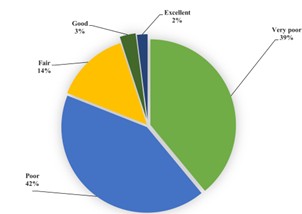
While the total DISCERN score was 31.00 (23.00 to 36.00), implying an overall poor quality, the item assessment varied, with most items having a median score of one (Table 2). The highest scores per item were 4.00 (2.00 to 5.00) for relevance of videos, followed by 4.00 (1.75 to 5.00) for clarity of aims, 3.00 (2.00 to 5.00) for being balanced and unbiased, and 3.00 (1.75 to 5.00) for achieving aims. It is noteworthy that the last item rating the overall quality of the publication as a source of information about treatment choices had a median score of 1.00 (1.00 to 1.00). Only 14 videos were of fair quality, three of good quality, and two of excellent quality (Figure 1).
|
DISCERN Item |
No # |
Partial # |
Yes # |
Median (IQR) Score |
||
|
1 |
2 |
3 |
4 |
5 |
||
|
1. Are the aims clear? |
25 |
6 |
17 |
18 |
34 |
4.00 (1.75 to 5.00) |
|
2. Does it achieve its aims? |
25 |
7 |
19 |
17 |
32 |
3.00 (1.75 to 5.00) |
|
3. Is it relevant? |
20 |
8 |
17 |
16 |
39 |
4.00 (2.00 to 5.00) |
|
4. Is it clear what sources of information were used to compile the publication (other than the author or producer)? |
55 |
11 |
12 |
9 |
13 |
1.00 (1.00 to 3.00) |
|
5. Is it clear when the information used or reported in the publication was produced? |
47 |
12 |
19 |
4 |
18 |
2.00 (1.00 to 3.00) |
|
6. Is it balanced and unbiased? |
23 |
19 |
16 |
10 |
32 |
3.00 (2.00 to 5.00) |
|
7. Does it provide details of additional sources of support and information? |
59 |
14 |
11 |
5 |
11 |
1.00 (1.00 to 3.00) |
|
8. Does it refer to areas of uncertainty? |
70 |
15 |
9 |
1 |
5 |
1.00 (1.00 to 2.00) |
|
9. Does it describe how each treatment works? |
77 |
11 |
7 |
2 |
3 |
1.00 (1.00 to 1.00) |
|
10. Does it describe the benefits of each treatment? |
79 |
9 |
7 |
2 |
3 |
1.00 (1.00 to 1.00) |
|
11. Does it describe the risks of each treatment? |
86 |
7 |
3 |
1 |
3 |
1.00 (1.00 to 1.00) |
|
12. Does it describe what would happen if no treatment is used? |
88 |
7 |
2 |
2 |
1 |
1.00 (1.00 to 1.00) |
|
13. Does it describe how the treatment choices affect overall quality of life? |
87 |
8 |
2 |
2 |
1 |
1.00 (1.00 to 1.00) |
|
14. Is it clear that there may be more than one possible treatment choice? |
92 |
4 |
1 |
2 |
1 |
1.00 (1.00 to 1.00) |
|
15. Does it provide support for shared decision-making? |
92 |
3 |
2 |
1 |
2 |
1.00 (1.00 to 1.00) |
|
16. Based on the answers to all of the above questions, rate the overall quality of the publication as a source of information about treatment choices |
100 |
0 |
0 |
0 |
0 |
1.00 (1.00 to 1.00) |
|
Total DISCERN Score |
31.00 (23.00 to 36.00) |
|||||
|
# Described as number of videos (%) per category of the five categories from the lowest (1) to the highest (5) value. |
||||||
Difference in videos according to source (HCP or non-HCP)
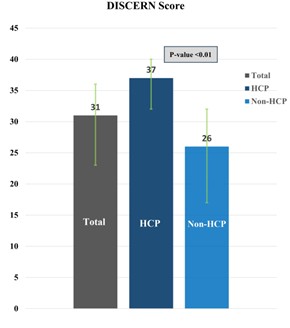
We compared videos streamed by HCP and non-HCP (Table 3). While having insignificant differences in video durations, the two groups showed a significant difference (P-value<0.01) in the content. The HCP group had 15 (45.45%) and 5 (15.15%) videos on disease description and therapy suggestion, respectively, compared to 15 (22.39%) and 5 (7.46%) in the non-HCP group. On the other hand, the non-HCP had 13 (19.40%) videos on lifestyle compared to only 2 (6.06%) in the HCP group. Both groups had comparable engagement metrics (likes, shares, and comments) while having two distinct DISCREN scores: 37.00 (32.00 to 40.00) for the HCP group and 26.00 (17.00 to 32.00 for the non-HCP group (P-value<0.01) (Figure 2). Of the HCP group, 13 (39.39%) videos were of fair quality or higher compared to only six videos (8.95%) of the non-HCP group. Notably, the assessment for each item showed a significant difference in some items between HCP and non-HCP groups (Supplementary Table S1).
|
Labels |
Levels |
Source of Videos Frequency (%) (N=100) |
P-value # |
||
|
Healthcare Professional |
Non- Healthcare Professional |
||||
|
Content of videos |
Disease description |
15 (45.45) |
15 (22.39) |
0.01 |
|
|
Therapy suggestion |
5 (15.15) |
5 (7.46) |
|||
|
Lifestyle |
2 (6.06) |
13 (19.40) |
|||
|
News |
4 (12.12) |
4 (5.97) |
|||
|
Fun |
0 (0.00) |
10 (14.93) |
|||
|
Others (Unclassified) |
7 (21.21) |
20 (29.85) |
|||
|
Video duration in seconds |
Median (IQR) |
72.00 (59.00 to 115.00) |
60.00 (32.50 to 113.00) |
0.31 |
|
|
Duration |
Less than a minute |
11 (33.33) |
32 (47.76) |
0.26 |
|
|
1-3 minutes |
18 (54.55) |
25 (37.31) |
|||
|
More than three minutes |
4 (12.12) |
10 (14.93) |
|||
|
Days since upload |
Median (IQR) |
452.00 (82.00 to 726.00) |
419.00 (84.50 to 656.00) |
0.82 |
|
|
Likes |
Median (IQR) |
4205.00 (334.00 to 34200.00) |
4197.00 (231.30 to 76750.00) |
0.75 |
|
|
Comments |
Median (IQR) |
112.00 (13.00 to 432.00) |
134.00 (16.00 to 1524.00) |
0.45 |
|
|
Shares |
Median (IQR) |
649.00 (86.00 to 3534.00) |
329.00 (31.00 to 2975.50) |
0.49 |
|
|
DISCERN score |
Median (IQR) |
37.00 (32.00 to 40.00) |
26.00 (17.00 to 32.00) |
<0.01 |
|
|
DISCERN category |
Very poor |
2 (6.06) |
37 (55.22) |
<0.01 |
|
|
Poor |
18 (54.55) |
24 (35.82) |
|||
|
Fair |
10 (30.30) |
4 (5.97) |
|||
|
Good |
2 (6.06) |
1 (1.49) |
|||
|
Excellent |
1 (3.03) |
1 (1.49) |
|||
|
# P-value is for Fisher exact test and Mann-Whitney U test for categorical and continuous variables respectively. Significance level is at 0.05. |
|||||
Engagement metrics and DISCERN score according to the source and content of videos
While having no significant difference in video duration, the videos varied significantly with different sources, with news agencies followed by family members having the highest median likes (P-value<0.01) (Supplementary Table S2). Similarly, family members followed by news agencies had the highest median comments (P-value=0.01). Notably, videos streamed by news agencies had the highest median DISCERN score of 47 (38 to 56), followed by videos by physicians with a median of 37 (33 to 44.50) (P-value<0.01) (Supplementary Figure S1).
Regarding video content, the videos varied significantly with different content, with fun content followed by lifestyle having the highest median likes (P-value=0.02) (Supplementary Table S3). Similarly, videos on fun followed by lifestyle had the highest median comments (P-value=0.04). Notably, videos on therapy suggestions had the highest median DISCERN score of 38.50 (32 to 42.25), followed by videos on disease description with a median of 35 (32 to 39.75) (P-value<0.01) (Supplementary Figure S2).
We used Spearman’s correlation to assess relationships between engagement metrics (likes, shares, and comments) and DISCERN scores. The DISCERN score non-significant correlation with likes (coefficient= -0.1, p-value=0.4), comments (coefficient= -0.1, p-value=0.4), and shares (coefficient= -0.01, p-value=0.9).
Discussion
Social media has been used for different purposes by different users in the healthcare context [8,16]. Not only do patients and the public population have social media accounts, but also most health organizations and HCPs [16,17]. Proper information on social media can provide emotional, informational, and peer support, which can improve the health outcome and patients’ reaction to their diagnosis [8,10,18]. Thus, social media can be a precious tool to disseminate essential information to the population. However, there is a paucity of data regarding AD information on social media and its effectiveness or implications [19].
This study is the first to analyze the information on AD published in TikTok videos. The primary findings of this study are that around two-thirds of the content came from non-healthcare sources, mainly family members and others. Although social media platforms have not traditionally been a source of information for chronic diseases, especially neurological diseases, a previous study on an educational portal that used Facebook as an advertising platform showed high satisfaction and engagement rates among visitors who visited looking for prevention and treatment of AD [19]. Nevertheless, in this study, videos on disease description and therapy suggestion got lower engagement than fun, lifestyle, and news videos. This could be due to the nature of TikTok content that can make medical information not conveniently understandable in short videos, while in the previous study, they used social media as an advertising platform that has access to the educational online portal [19].
Bacsu et al, in their thematic analysis of dementia-related posts on the X platform, analyzed how stigma to dementia manifests on social media, which is, in part, due to misinformation and disbeliefs [20]. While this encourages policymakers and institutions to combat the spread of false information through social media, stigma issues can be a significant barrier against the dissemination of information.
Medical information on social media, if properly set, can function along with medical management [9]. Nevertheless, care should be taken on who spreads the information since some platform algorithms, such as TikTok, can make spreading of fun videos more virally than other important content by HCPs. Social media algorithms can play a major role in promoting high-engagement but low-quality and less useful content. It is noteworthy that, despite the advancement in technology and social media, a great portion of HCPs do not actively post on some social platforms or even have an account. This paves the way for non-professionals to provide their own, unprofessional, non-peer-reviewed, and unsupervised perspective on information or experience with medical issues.
Although the overall DISCERN assessment implied a low quality of videos as a source of information on treatment options, physician-made videos scored much higher on DISCERN (higher quality) than videos from other sources, and HCP-made videos had significantly higher quality than non-HCP-made videos. This is likely due to the formal medical training, which helps them accurately explain complex information and use evidence-based practices. On the other hand, videos from family members are very engaging but of low quality. This is likely because they focus on personal stories and emotional experiences, often giving well-meaning but unsupported advice. While personal storytelling fits TikTok well, it reduces the quality of information. This shows that just because something is popular doesn’t mean it is accurate, which can lead to misinformation for viewers seeking help [16,21].
Moreover, the content engagement on TikTok is not a reflection of quality. While quality score had a non-significant correlation with engagement metrics, "Fun" videos achieved much significant engagement, but they have low DISCERN scores, suggesting that content aimed purely at entertainment often sacrifices depth and accuracy. Conversely, "Therapy Suggestion" and "Disease Description" videos are deemed more credible but receive less engagement. This supports TikTok's algorithm preference for emotionally engaging or amusing content rather than comprehensive educational resources [13,16,21,22]. As a result, the most popular Alzheimer's videos carry a significant risk of minimizing the disease's severity or promoting inadequately simplistic solutions.
The present findings match earlier research that shows health information on social media platforms like YouTube and Instagram is mostly low-quality, especially from non-professional sources. We see many personal stories, like those from family members, which are similar to what studies say about mental health content on TikTok [23]. However, our results differ from some studies that say HCPs are using short videos effectively. In our case, even videos made by doctors rarely reached high-quality standards, suggesting that TikTok’s format makes effective health information communication harder compared to longer video platforms.
The present study does have some limitations. The DISCERN tool, used in this study, is primarily designed for written material, although it has been used for digital content in previous studies [14]. Although three reviewers independently assessed the quality, inter-rater reliability could enhance the reliability of the results. Excluding non-English and non-Arabic videos may jeopardise the generalizability of the results. Furthermore, the study analysed the most popular videos as they appear, which reflects the high engagement, but not necessarily the quality and content of the videos, which introduces a selection bias. Although less engaging videos may provide high-quality content, low-quality health content on various platforms shares common problems [16]. These include a lack of peer review, a focus on engagement metrics, and not enough moderation of
health claims. On TikTok, HCPs face specific challenges. The platform requires short videos, usually between 60 and 90 seconds, making it hard to discuss complex health issues like AD in detail. TikTok’s algorithm also favors content that gets emotional reactions, such as personal stories or humor, instead of prioritizing accuracy [12,13,16, 21,22]. Creating interesting and accurate short videos requires skills that go beyond clinical knowledge. Finally, the study looked at popular videos designed for virality. Exploring content from health educators could offer different insights. This gap highlights the need for HCPs to produce more engaging and informative content to improve public awareness of AD on TikTok.
Conclusion
This study provides an analysis of the top 100 most popular TikTok videos related to AD. Alzheimer’s content on TikTok is mostly low-quality and driven by non-professional sources, while HCPs’ videos are more accurate but less engaging. This highlights the urgent need for HCPs to create accessible, evidence-based content to improve public awareness.
Declarations
Conflicts of interest: The authors have declared that no competing interests exist.
Ethical approval: As this study exclusively utilized publicly available data from the TikTok platform, it did not require formal institutional review or individual participant consent. The data collection adhered to the platform's Terms of Service and focused on content intended for public consumption.
Patient consent (participation and publication): In accordance with standard ethical guidelines for internet-mediated research, this study was classified as non-human subjects research. Because the analysis was limited to existing, public-access video content, informed consent from creators was not required.
Funding: The present study received no financial support.
Acknowledgements: The authors are grateful for Research Yard for Research and Academic Services for their mentorship and efforts in finalizing this project.
Authors' contributions: AM and AO Conceptualizations; Methodology; Writing – original draft. TAA Conceptualization; Methodology; Data curation. AI, SS, SBHS, MM, and RB Data curation; Writing – original draft. HTA Supervision; Data analysis; Writing – review and editing. All authors approved the final version of the manuscript.
Use of AI: AI was not used in the drafting of the manuscript, the production of graphical elements, or the collection and analysis of data.
Data availability statement: The datasets used and/or analyzed during the current study are available from the corresponding author upon reasonable request.
References
- Alzheimer’s Association, “2024 Alzheimer’s disease facts and figures,” Alzheimers Dement. J. Alzheimers Assoc., vol. 20, no. 5, pp. 3708–3821, May 2024, doi:10.1002/alz.13809
- S. Khan, K. H. Barve, and M. S. Kumar, “Recent Advancements in Pathogenesis, Diagnostics and Treatment of Alzheimer’s Disease,” Curr. Neuropharmacol., vol. 18, no. 11, pp. 1106–1125, 2020, doi:10.2174/1570159X18666200528142429
- A. A. Alhazzani, A. M. Alqahtani, M. S. Alqahtani, T. M. Alahmari, and A. A. Zarbah, “Public awareness, knowledge, and attitude toward Alzheimer’s disease in Aseer region, Saudi Arabia,” Egypt. J. Neurol. Psychiatry Neurosurg., vol. 56, no. 1, p. 81, Jul. 2020, doi:10.1186/s41983-020-00213-z.
- W. Kong, S. Song, Y. C. Zhao, Q. Zhu, and L. Sha, “TikTok as a Health Information Source: Assessment of the Quality of Information in Diabetes-Related Videos,” J. Med. Internet Res., vol. 23, no. 9, p. e30409, Sep. 2021, doi:10.2196/30409.
- A. M. Ostrovsky and J. R. Chen, “TikTok and Its Role in COVID-19 Information Propagation,” J. Adolesc. Health, vol. 67, no. 5, p. 730, Nov. 2020, doi:10.1016/j.jadohealth.2020.07.039.
- E. Bernstein, N. Bhardwaj, E. R. Pfoh, and E. Yudelevich, “A Nationwide Survey of Educational Resource Utilization and Perception Among Internal Medicine Residents,” J. Gen. Intern. Med., vol. 36, no. 6, pp. 1598–1604, Jun. 2021, doi:10.1007/s11606-020-06441-6.
- S. Song, X. Xue, Y. C. Zhao, J. Li, Q. Zhu, and M. Zhao, “Short-Video Apps as a Health Information Source for Chronic Obstructive Pulmonary Disease: Information Quality Assessment of TikTok Videos,” J. Med. Internet Res., vol. 23, no. 12, p. e28318, Dec. 2021, doi:10.2196/28318.
- A. Jha, L. Lin, and E. Savoia, “The Use of Social Media by State Health Departments in the US: Analyzing Health Communication Through Facebook,” J. Community Health, vol. 41, no. 1, pp. 174–179, Feb. 2016, doi:10.1007/s10900-015-0083-4.
- J. Zhao, H. Han, B. Zhong, W. Xie, Y. Chen, and M. Zhi, “Health information on social media helps mitigate Crohn’s disease symptoms and improves patients’ clinical course,” Comput. Hum. Behav., vol. 115, p. 106588, Feb. 2021, doi:10.1016/j.chb.2020.106588.
- L. A. Braun, B. Zomorodbakhsch, C. Keinki, and J. Huebner, “Information needs, communication and usage of social media by cancer patients and their relatives,” J. Cancer Res. Clin. Oncol., vol. 145, no. 7, pp. 1865–1875, Jul. 2019, doi:10.1007/s00432-019-02929-9.
- A. Kalnow et al., “Continuing Medical Education Delivery Preferences Among Physicians and Advanced Practice Providers in Emergency Medicine,” Cureus, Dec. 2021, doi:10.7759/cureus.20406.
- F. Sun, S. Zheng, and J. Wu, “Quality of Information in Gallstone Disease Videos on TikTok: Cross-sectional Study,” J. Med. Internet Res., vol. 25, p. e39162, Feb. 2023, doi:10.2196/39162.
- C. E. Kirkpatrick and L. L. Lawrie, “TikTok as a Source of Health Information and Misinformation for Young Women in the United States: Survey Study,” JMIR Infodemiology, vol. 4, p. e54663, May 2024, doi:10.2196/54663.
- D. Charnock, S. Shepperd, G. Needham, and R. Gann, “DISCERN: an instrument for judging the quality of written consumer health information on treatment choices.,” J. Epidemiol. Community Health, vol. 53, no. 2, pp. 105–111, Feb. 1999, doi:10.1136/jech.53.2.105.
- C. E. Rees, J. E. Ford, and C. E. Sheard, “Evaluating the reliability of DISCERN: a tool for assessing the quality of written patient information on treatment choices,” Patient Educ. Couns., vol. 47, no. 3, pp. 273–275, Jul. 2002, doi:10.1016/s0738-3991(01)00225-7.
- J. Chen and Y. Wang, “Social Media Use for Health Purposes: Systematic Review,” J. Med. Internet Res., vol. 23, no. 5, p. e17917, May 2021, doi:10.2196/17917.
- E. R. Ranschaert, P. M. A. Van Ooijen, G. B. McGinty, and P. M. Parizel, “Radiologists’ Usage of Social Media: Results of the RANSOM Survey,” J. Digit. Imaging, vol. 29, no. 4, pp. 443–449, Aug. 2016, doi:10.1007/s10278-016-9865-1.
- Y. Zhong, W. Liu, T.-Y. Lee, H. Zhao, and J. Ji, “Risk perception, knowledge, information sources and emotional states among COVID-19 patients in Wuhan, China,” Nurs. Outlook, vol. 69, no. 1, pp. 13–21, 2021, doi:10.1016/j.outlook.2020.08.005.
- R. S. Isaacson et al., “Using social media to disseminate education about Alzheimer’s prevention & treatment: a pilot study on Alzheimer’s universe (www.AlzU.org),” J. Commun. Healthc., vol. 11, no. 2, pp. 106–113, 2018, doi:10.1080/17538068.2018.1467068.
- J.-D. Bacsu et al., “Stigma of Dementia on Social Media During World Alzheimer’s Awareness Month: Thematic Analysis of Posts,” JMIR Form. Res., vol. 9, p. e72775, Jun. 2025, doi:10.2196/72775.
- Z. Chen and C. Shi, “Analysis of Algorithm Recommendation Mechanism of TikTok,” Int. J. Educ. Humanit., vol. 4, pp. 12–14, Aug. 2022, doi:10.54097/ijeh.v4i1.1152.
- R. Zhou, “Understanding the Impact of TikTok’s Recommendation Algorithm on User Engagement,” Int. J. Comput. Sci. Inf. Technol., vol. 3, pp. 201–208, Jul. 2024, doi:10.62051/ijcsit.v3n2.24.
- S. Lukić and J. Petrović, “The quality of information provided by the most popular dementia videos on TikTok,” Front. Public Health, vol. 11, p. 1266415, 2023, doi:10.3389/fpubh.2023.1266415

This work is licensed under a Creative Commons Attribution 4.0 International License.